In-home vs center-based ABA therapy, home vs clinic: choosing the best setting for your child
In-home ABA teaches skills in your own house and routines. Center-based ABA teaches in a clinic with other children nearby. Neither is better for every child, so here is how to choose.
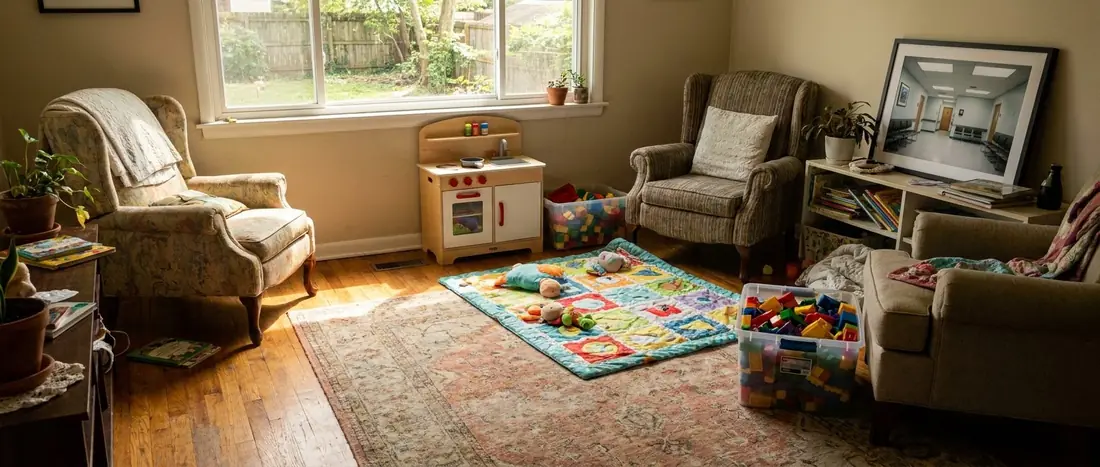
In-home ABA is usually the better fit for toddlers, home routines and families who want to learn the strategies, while center-based ABA suits children who need lots of practice with peers or a classroom-like day. In-Home ABA Richmond is in-home only, so we will tell you honestly when a center may suit your child better.
- The teaching methods are the same. The setting changes what your child practises.
- Home is best for daily living skills, family routines and young children.
- A center is best for group skills, structure and families who can't be home during sessions.
- Many Richmond children do both, or move from one to the other as they grow.
Differences between in-home and center-based ABA therapy
| In-home ABA | Center-based ABA | |
|---|---|---|
| Where | Your house, yard and neighborhood | A clinic with therapy rooms |
| Best for | Toddlers, daily routines, potty training, family life | Group and peer skills, school readiness |
| Parent role | You're at home and join parts of sessions | Drop-off, with parent training sessions |
| Peers | Siblings, neighbors, playdates | Other children in the center |
| Distractions | Real ones: TV, pets, siblings (useful to practise with) | Fewer, set up on purpose |
| Travel | None for you | Daily drive to the center |
| Cost with insurance | Usually billed the same way | Usually billed the same way |
Benefits of in-home ABA therapy
- Skills where they're needed. Children with autism often find it hard to use a skill in a new place. Home teaching skips that step.
- Real routines. Meals, bath, bedtime and getting out the door can be taught when they really happen.
- Family learning. Parents and siblings see the strategies every week.
- Comfort. Many young children relax faster in their own space, so a child learns more in the first weeks.
- Help where the problem is. If your child struggles most in the home environment, therapy in that home setting can help your child exactly where it's hard.
- No commute. No drive across Richmond in traffic, which matters for many hours a week.
“Doing the services in the natural environment has shown the biggest success”
Benefits of center-based ABA therapy
- Peers. More chances to practise sharing, turn-taking and group games with other children. Many centers run a small autism therapy group for social skills.
- Structure. A center can feel like a classroom, which helps some children get ready for school.
- More staff nearby. BCBAs and other therapists are on site, which can make supervision easier.
- Time for parents. If no adult can be home during sessions, a center solves that.
These are real advantages, and we don't offer a center. If they matter most for your child, a center may be the better choice.
Choosing between in-home and center-based ABA: which therapy setting is best for your child?
Ask yourself these questions:
- Is my child under five and mostly at home during the day? In-home often fits.
- Are the hardest moments at home, like meals, bedtime or toileting? In-home often fits.
- Does my child need lots of practice with other kids before kindergarten? A center may fit.
- Can an adult be home during every session? If not, a center may fit.
- Does my child get overwhelmed in new places? Home may be an easier start.
There's no wrong answer. Choosing the right therapy setting is about your child's goals right now, and the best setting is the one your child will actually attend consistently. In-home therapy may also need a dedicated therapy space at home, even a small one.
Home or clinic, or both? Combining in-home ABA therapy and a center
Yes. Some children start at home and move to a center as they get ready for school. Others go to a center during the day and have a few in-home hours for family routines. Insurance generally approves total ABA hours for your child, not hours per building, but check your plan.
If you switch providers, the new one does its own assessment and requests a new authorization. Your child's diagnosis carries over.
A day in each ABA therapy setting: home vs clinic
Here's how the same goal, asking for help, might look in each therapy setting for a four-year-old child with autism spectrum disorder.
| Time | At home | At a center |
|---|---|---|
| Start | The therapist arrives; your child is already in their own space | Drive, drop-off, a short settling-in time |
| Teaching | Asking for help with a stuck toy, a juice cup, a coat zipper | Asking for help with set-up activities in a therapy room |
| Peers | A sibling joins a turn-taking game | Small group circle time with other children |
| Parent | You try the strategy at snack time while the therapist watches | A scheduled parent training session, often separate |
| After | The skill is already in your routine | The skill needs practice at home to carry over |
Neither day is wrong. Where ABA therapy takes place shapes which parts of the skill your child practises most. At home the child already knows the place; at a center the child feels the structure of a classroom.
When to change settings
The right setting can evolve as your child grows. A common path is in-home therapy in the toddler years, when daily routines matter most, then more time in a center or classroom as school gets closer. Another child might start at a center and add home sessions when bedtime or toileting becomes the hardest part of the day.
Ask your BCBA every few months: is this setting still the best for my child's goals? A good provider will tell you honestly, even if the answer is a different provider.
The Richmond picture: where autism therapy centers are
Our pull of ABA listings on Google Maps found most offices in Henrico's West End (ZIP codes 23233 and 23294) and in Midlothian (23112). Those are the easiest places to reach a center. Families in Southside Richmond, the East End, Hanover County and south toward Petersburg have far fewer offices nearby, so in-home ABA is often the practical choice. See our areas page for the full count.
Want to see what home sessions look like first? Read what in-home ABA looks like, or learn about in-home ABA therapy in Richmond.
Questions about in-home and center-based ABA
Is in-home ABA as effective as center-based ABA?
Both use the same methods and can work well. What matters most is a good BCBA, the right number of hours, steady attendance and parents who use the strategies. The setting should match your child's goals.
Does insurance cover both settings?
Generally, yes. Virginia Medicaid and most private plans cover medically necessary ABA, and the setting is part of the treatment plan. Check your plan's rules.
Can my child switch between center-based and in-home therapy?
Yes. Talk to your BCBA about why, then plan the change so your child's routine stays steady.
What about therapy at daycare or school?
Some plans allow ABA in other places your child spends time. School-day support usually comes through the IEP. We check what your plan allows.