ABA therapy for toddlers with autism: early intervention at home in Richmond
For a little one, in-home ABA looks like play: short, happy practice of words, gestures and routines on your living room floor, with you learning every step.
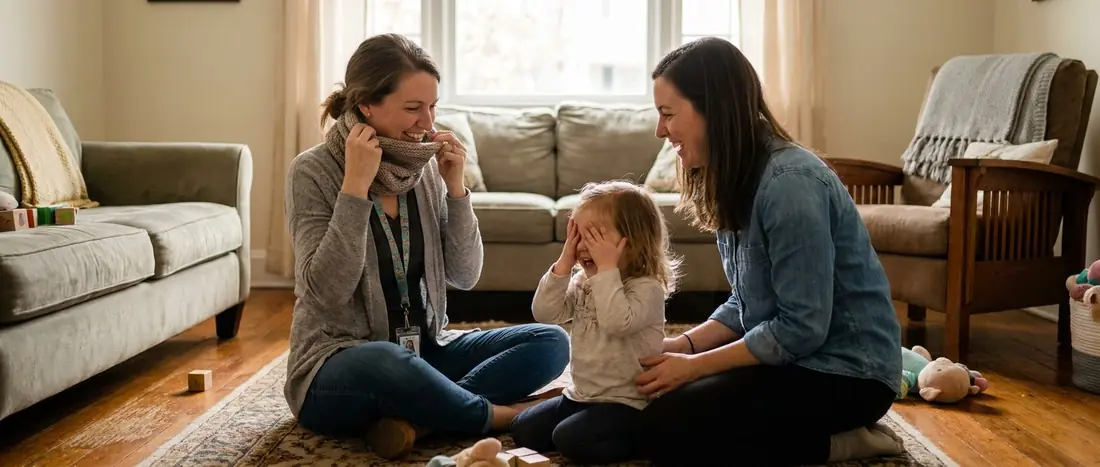
ABA therapy for toddlers is early intervention built on play. In-Home ABA Richmond works with children from 18 months old, at home, on the skills that unlock the rest: looking, pointing, copying, asking and taking turns.
- Starting early matters: the toddler brain changes fast, and therapy can use that window.
- Sessions are play, songs, snacks and routines. Your child should enjoy them.
- Parents get more coaching at this age, because you're with your child all day.
- ABA can run alongside Virginia's Infant & Toddler Connection services and preschool.
Understanding ABA therapy: why starting early works
Most of a child's language and social learning happens before age five. A child may benefit from ABA well before school. When autistic children get support early, skills like pointing, babbling and copying can grow while they're still easy to shape.
ABA therapy can help children build communication and life skills at any age, and older children benefit too. But the principles of applied behavior analysis work especially well when the brain is changing fastest. That doesn't mean waiting is a failure. Children learn at every age. But if you're wondering whether to start now or wait, the research leans toward now.
“If the parent can start early, then we are more likely to change the child’s trajectory of learning for the rest of their life.”
Signs of autism that are worth a call
Every child develops at their own pace. These are common reasons parents look into ABA. The American Academy of Pediatrics recommends autism screening at the 18-month and 24-month checkups, so ask your pediatrician.
- Few words, or words that went away
- Not pointing to show you things
- Not answering to their name most of the time
- Little back-and-forth babbling or smiling
- Lining up toys instead of playing with them
- Big meltdowns at small changes
- Not copying claps, waves or faces
- Walking on tiptoes, flapping, spinning a lot
The CDC keeps a free milestone checklist by age. If you're worried, you don't need to wait for a diagnosis to ask for help.
What ABA sessions look like for a young child with autism
A session at this age is short bursts of teaching inside play, built on positive reinforcement. The therapist sits on the floor, follows your child's interest and turns it into practice.
| Your child loves | The therapist uses it to teach |
|---|---|
| Bubbles | Asking for "more" with a sound, sign or word |
| Peekaboo | Eye contact, waiting, laughing together |
| Cars and trains | Taking turns, "go" and "stop", naming colours |
| Snack time | Choosing between two foods, pointing, sitting at the table |
| Songs | Copying hand movements, filling in the missing word |
This style is called natural environment teaching. Some short structured activities (discrete trial training) may be added as your child grows, so the child learns to practice skills across different settings. You can read about a full in-home session.
The ABA therapy program: goals that support your child
The board certified behavior analyst picks goals after watching your child play and talking with you. Every child has individual needs, so there's no one-size-fits-all approach. A first plan for a two-year-old might include:
- Asking for a favourite thing, by pointing, signing or saying a word.
- Responding to their name.
- Copying simple actions with toys.
- Following one-step directions like "give me".
- Sitting for a short book or a snack.
- Calming down with help after a change.
Goals are small on purpose. Each one is a step toward talking, playing with other kids and joining preschool. As your child learns, the plan adds social skills, emotional regulation and daily living skills, and helps reduce challenging behaviors before they grow.
Early intervention services: ABA and Virginia's Infant & Toddler Connection
Virginia's early intervention program for babies and toddlers under three is called the Infant & Toddler Connection. It's a different service from ABA. It offers things like developmental services, speech and occupational therapy, often at home, under federal Part C law.
Your child can get both. Many families in Richmond start with Infant & Toddler Connection and add ABA once an autism diagnosis arrives. Our guide to early intervention in Richmond lists the local offices for the city, Henrico, Chesterfield and Hanover.
Can ABA therapy and preschool work together?
Your local school division also runs Child Find, which evaluates young children for special education preschool. ABA and preschool can work together. Many young children do ABA in the afternoon after a morning program.
If your child has an IEP, we can share goals with the teacher so everyone teaches the same skills the same way.
Is ABA right for your child? Diagnosis, referral and next steps
Many parents ask whether their child needs to be diagnosed with autism spectrum disorder before receiving ABA. To begin ABA through insurance, you usually need an autism diagnosis and a written order from a doctor. Medicaid plans ask for an authorization before therapy starts. We help with that paperwork. See how to get started and insurance and Medicaid.
Still waiting for an evaluation? That wait can be long in Richmond. Call us anyway. We can help you plan, and you can start Infant & Toddler Connection services without a diagnosis.
Questions about ABA therapy for toddlers with autism
What's the youngest age for ABA therapy?
We start at 18 months. Some children begin even earlier with early intervention programs. The right time is as soon as you and your doctor have concerns.
How many hours of ABA does a young child need?
There's no single number. The BCBA recommends hours after the assessment, based on your child's needs, attention span and your family's schedule. Insurance then approves the hours.
Is ABA too much for a two-year-old?
It shouldn't feel like work. Sessions at this age are mostly play, with breaks and snacks. If your child seems unhappy, tell the BCBA. The plan should change.
Can ABA help my toddler talk?
ABA can help many toddlers start communicating, with words, signs, pictures or a device. Read more about communication skills at home.