In-home ABA therapy services for autism
Every service we offer happens in your home, led by a BCBA and built around your child. Here is what in-home ABA can cover, from first words to potty training.
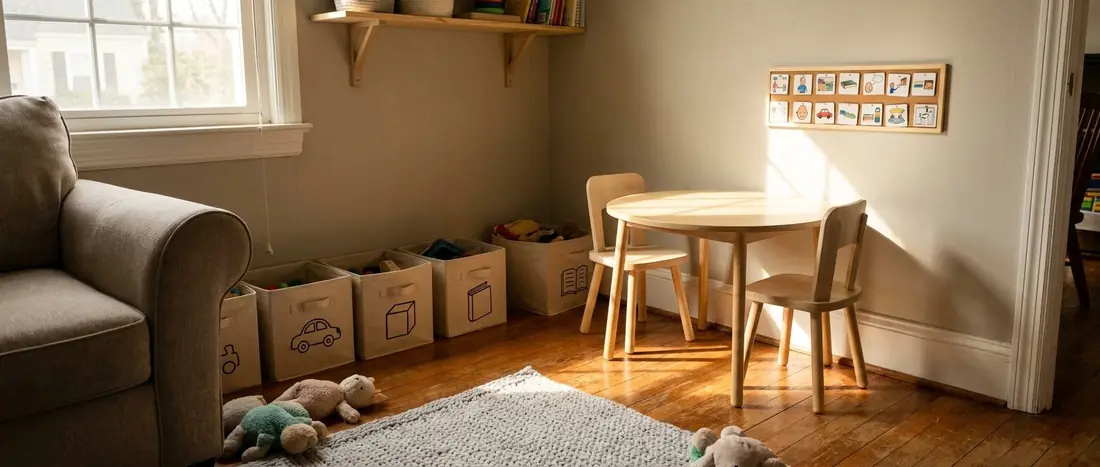
In-Home ABA Richmond offers one thing, done well: applied behavior analysis in your home. Inside that, a BCBA builds each child's plan from a menu of goals, and these are the ones families ask for most.
- A BCBA assessment at home and an individualized treatment plan that fits your child's specific needs.
- One-on-one therapy sessions with a Registered Behavior Technician.
- Regular BCBA supervision, data review and parent training.
- Help with insurance authorization, and school or IEP coordination when you want it.
Our home-based ABA therapy services
Pick the one closest to what you need. Most children's plans mix several.
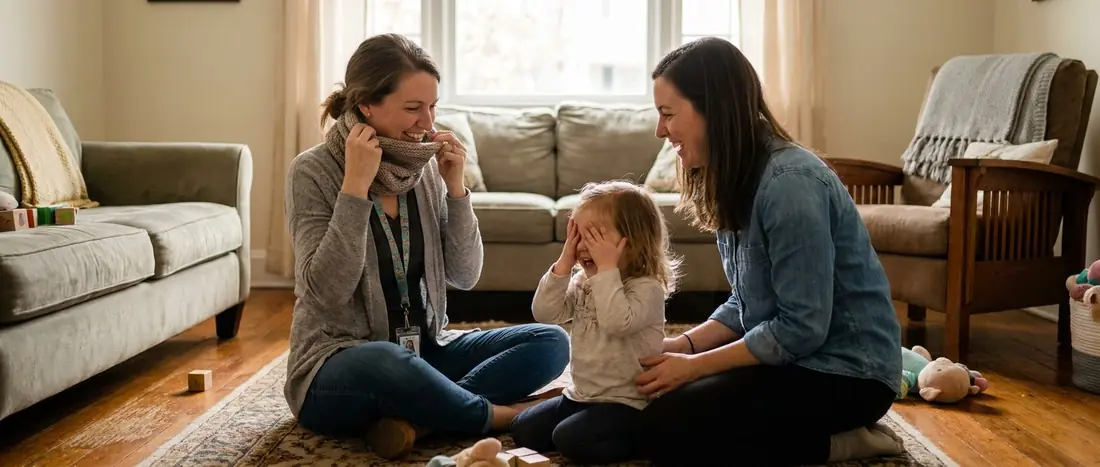
ABA for toddlers
Play-based early intervention from 18 months.
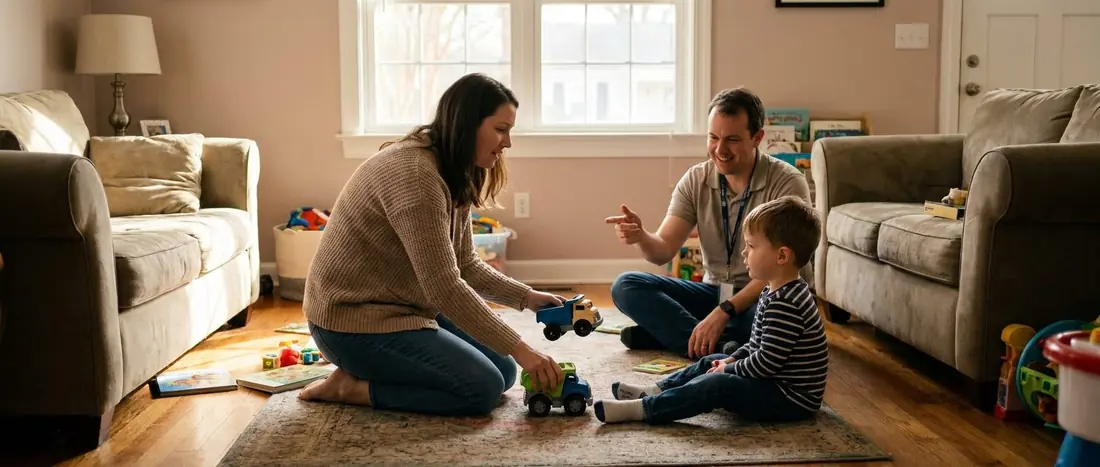
Parent training
Learn the strategies, in your own routines.
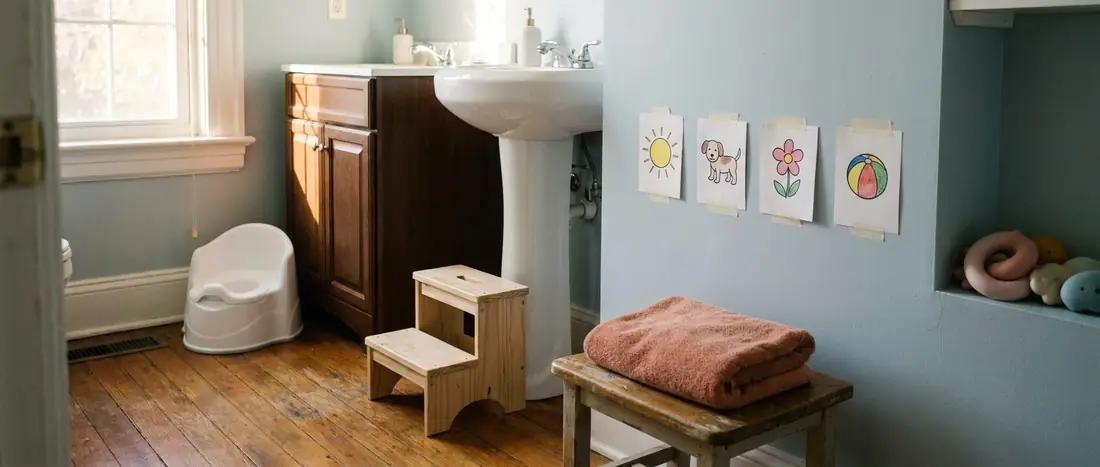
Potty training
Step-by-step toilet training in your own bathroom.
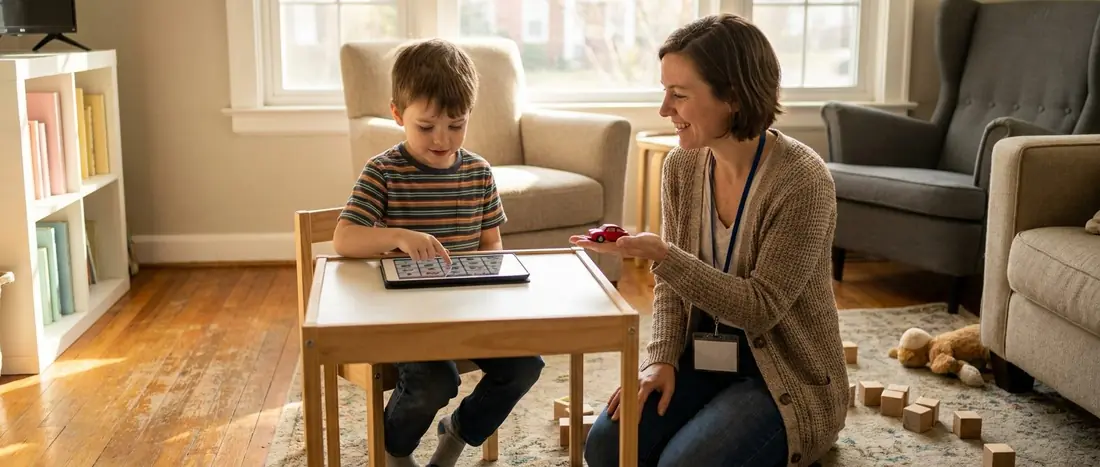
Communication skills
Words, signs, pictures or a device.
Tantrums and aggression
Find the why, teach a better way.
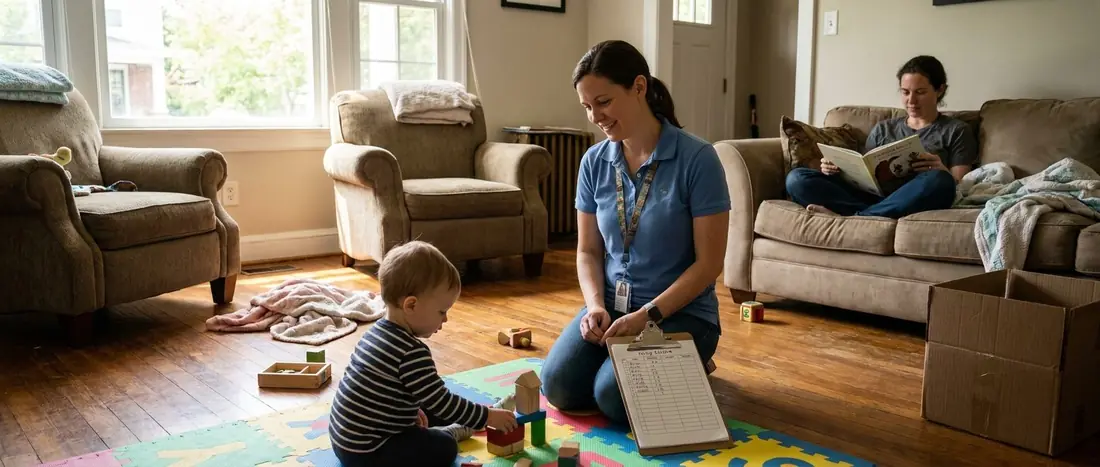
What in-home ABA looks like
A session hour by hour, and a sample week.
Who home-based autism therapy is for
We work with children with autism from 18 months to 12 years. Some have just been diagnosed. Some have had ABA in a center and want to move it home. Some are on Virginia Medicaid, some on private insurance.
In-home ABA is a strong fit when:
- Your child is young and most of their day is at home.
- The hardest moments happen at home: meals, bath, bedtime, getting out the door.
- You want to learn the strategies yourself.
- Driving to a center is hard because of work, siblings or distance.
It may not be the best fit if your child mainly needs practice with groups of other children, or if no adult can be home during sessions. Then a center or a mix may suit better. See in-home vs center-based ABA.
What we don't offer: clinic-based ABA and other therapies
We are clear about this so you can plan. We don't run a clinic or center. We don't do speech, occupational or physical therapy, and we don't make an autism diagnosis. We gladly work alongside the professionals who do. For evaluations, see autism evaluations in Richmond.
Skills a personalized ABA plan can target
| Area | Examples of goals |
|---|---|
| Communication | Asking for things, saying "help" or "all done", answering questions, using a device |
| Daily living | Toilet training, dressing, brushing teeth, mealtimes |
| Play and social skills | Taking turns, sharing with siblings, pretend play |
| Behavior | Fewer meltdowns, safer ways to ask for a break, handling "no" |
| Learning readiness | Sitting for a short task, following directions, waiting |
| Safety | Staying close outside, stopping when called, crossing the street with an adult |
Your ABA therapy options: home-based or a therapy center
Most ABA providers in Richmond offer one of two settings. Clinic-based ABA happens in a therapy center, with rooms set up for teaching and other children nearby. Home-based ABA happens in your child's natural environment, inside your daily routines, with family involvement in nearly every session.
Both use the same evidence-based methods, delivered by BCBAs and the behavior technicians they supervise. The difference is what your child practises and who practises with them. At home, parents and caregivers learn the strategies by watching and trying, which helps lasting progress after therapy hours end. Compare the two in detail in in-home vs center-based ABA.
How to begin ABA, and how autism care at home is delivered
Everything starts with a call and an assessment at home. The BCBA writes the plan, your insurance approves the hours, and a technician near you begins sessions on a steady weekly schedule. The BCBA supervises, checks the data and meets with you to adjust the plan. Read how to get started or see what a session looks like.
Questions about our services
How many hours of in-home ABA will my child get?
The BCBA recommends hours after the assessment, based on your child's needs. Your insurance then approves a number of hours a week, usually for a few months at a time.
How long do children usually stay in ABA?
It varies. Some children reach their goals in a year or two, others continue longer with fewer hours. The plan is reviewed regularly, and hours usually go down as skills grow.
Do you offer telehealth?
Parent training follow-ups can sometimes happen by video call. Direct therapy with your child happens in person at home.
Ready to talk? Book a call or read about in-home ABA therapy in Richmond.