ABA potty training at home: toilet training for children with autism
Toilet training is one of the most common goals in in-home ABA, and home is the best place to teach it: your bathroom, your schedule, your child's own routine.
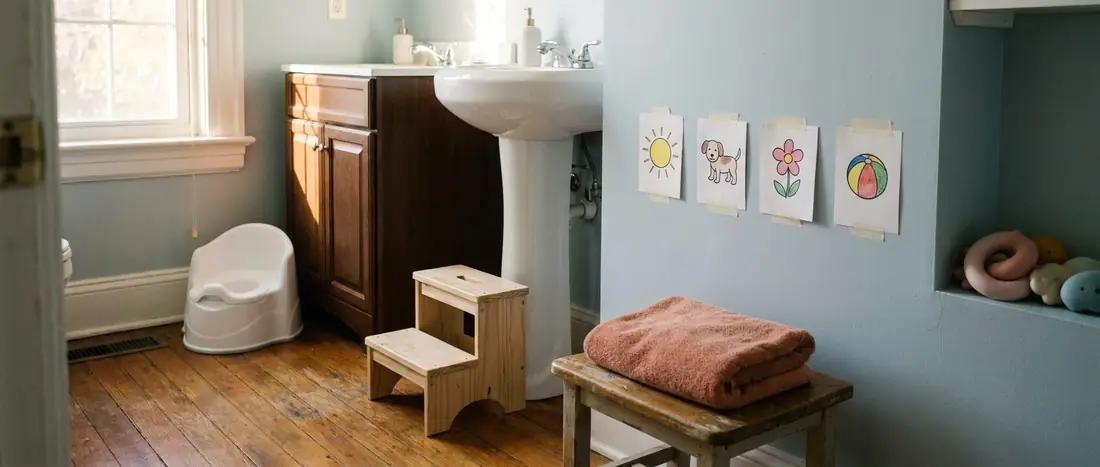
ABA potty training breaks using the toilet into small steps and teaches each one with a schedule, a picture routine and big rewards. In-Home ABA Richmond does it in your own bathroom, which is where the skill has to work.
- Many autistic children toilet train later, and that's common, not a failure.
- The method: scheduled sits, a visual routine, instant rewards and calm handling of accidents.
- Parents carry it through the whole day, so coaching is a big part of it.
- Daytime training usually comes first. Night training is its own goal.
Why toilet training children with autism can take longer
Using the toilet asks a lot of a child at once. They must notice the body signal, stop playing, go to a new room, handle clothes, sit, go, wipe, flush and wash. For a child with autism, each of those can be hard for a different reason.
- Body signals can be harder to notice.
- The bathroom can be loud, bright or echoing. Flushing can be scary.
- Changes to routine, like ditching diapers, can feel upsetting.
- Asking to go needs a way to communicate.
Using the toilet is a big milestone, and potty training can be challenging for any family. Applied behavior analysis helps because it teaches each piece on its own with positive reinforcement and predictability, then links them together. It's evidence-based and individualized to your child, including any sensory sensitivities.
“The central role of parents has been emphasized, and interventions are designed to incorporate learning opportunities into everyday activities, capitalize on "teachable moments," and facilitate the generalization of skills beyond the familiar home setting.”
Readiness: signs your autistic child is ready for toilet training
You don't need every sign. Your BCBA will look at these with you before starting.
- Stays dry for an hour or two
- Has regular bowel movements
- Notices a wet or dirty diaper
- Can sit for a minute or two
- Can pull pants down with some help
- Follows a simple instruction
Starting potty training: the ABA method, step by step
- Track first. For a few days you write down when your child is wet or dry. Patterns show the best times to sit.
- Make a picture routine. A visual schedule with simple cards for each step goes on the bathroom wall at your child's eye level. Some families add short social stories about using the bathroom.
- Pick a big reward. Something your child loves, kept only for the toilet: a sticker, a song, a special toy.
- Scheduled sits. Short sits on the toilet at set times, often every 30 to 60 minutes at the start.
- Reward right away. The moment pee or poop lands in the toilet, the reward and the praise come.
- Teach asking. A word, a sign or a picture card for "potty", so your child can tell you.
- Stretch the time. As your child succeeds, the gaps between sits grow longer.
- Use it everywhere. Grandma's house, daycare, a store restroom. The skill has to travel.
- Finish the routine. Flushing, pulling clothes up and teaching your child to wash their hands are part of the skill, so they get practice and praise too.
Use visual schedules: a sample potty schedule for the first week
| Time | What happens |
|---|---|
| On waking | First sit, with the picture routine |
| After breakfast | Sit for two minutes, reward if they go |
| Every 30 to 45 minutes | Timer goes off, short sit, back to play |
| After lunch and snacks | Sit, because eating often triggers a bowel movement |
| Before the car, bath and bed | Last sits of the day |
This is an example only. Your BCBA sets the timing from your child's own data.
Accidents and setbacks
Accidents will happen. Stay calm and neutral. Say something short like "pee goes in the potty", help your child clean up and change, and move on. Big reactions, good or bad, can make accidents more interesting than the toilet.
A setback after a move, a new sibling or an illness is normal. The team will go back a step and rebuild.
Night training and when to ask your BCBA
Staying dry at night depends partly on the body, not only on learning. Many children are dry in the day long before they're dry at night. Your pediatrician is the right person to ask about bedwetting, and ABA can help with the routine part: last drink, last sit, nightlights and a clear path to the bathroom.
Potty training often comes with other self-care goals, like handwashing and dressing. See all in-home ABA services, or start with a call.
Questions about ABA potty training for a child on the spectrum
How long does ABA potty training take?
It varies a lot. Some children train in a few weeks, others need months. Steady practice every day, by everyone who cares for your child, is what speeds it up.
Can ABA help an older child who is still in diapers?
Yes. It's never too late to start. Older children may need more work on communication and on getting used to the bathroom, but the same step-by-step method applies.
What if my child is scared of the toilet?
The therapist starts small: walking into the bathroom, sitting with clothes on, flushing from far away. Each small step gets a reward until the fear fades.
Does insurance cover potty training in ABA?
When toilet training is a goal in an approved ABA treatment plan, it's covered like the rest of the plan. See insurance and Medicaid.