How to prepare your home for in-home ABA therapy sessions
You do not need a special room or a spotless house. A little floor space, a few favourite things and a plan for siblings and screens is enough to start in-home ABA well.
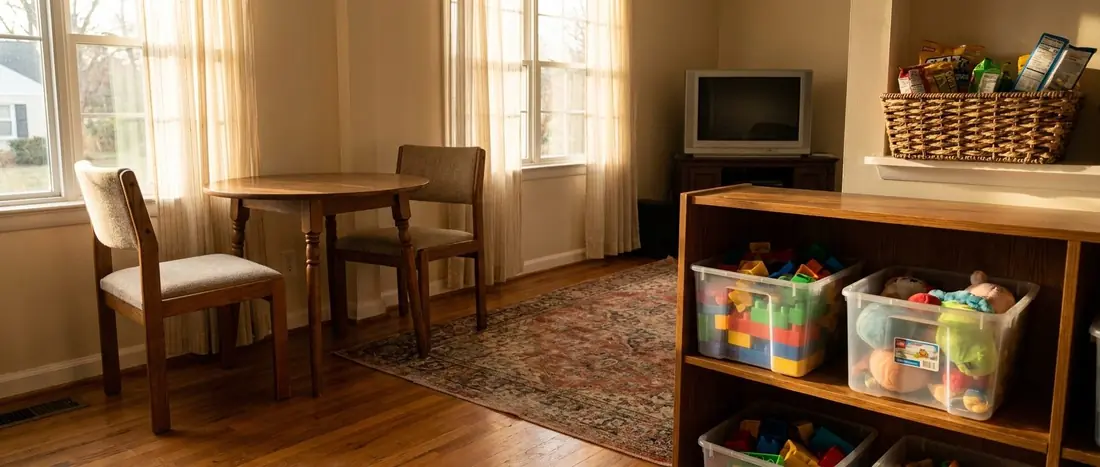
To prepare your home for in-home ABA, clear a small play area, keep a few of your child's favourite toys and snacks ready, turn off screens during sessions, and plan who looks after siblings and pets. Your In-Home ABA Richmond BCBA will help you set it up on the first visit.
- Space: a clear patch of floor and a small table, even the kitchen table.
- Stuff: a bin for therapy toys, your child's favourites set aside, simple snacks.
- People: an adult at home for every session, and a plan for siblings.
- Rules: tell us your house rules. Shoes, pets, rooms that are off limits, all fine.
How much therapy space you need to prepare your home
Less than most parents expect. A corner of the living room, a bedroom floor or the kitchen table works. The therapist will move around the house anyway, because the point is to teach in real places: the bathroom for handwashing, the front door for shoes, the table for meals.
A small table and two chairs at your child's height help for short sit-down tasks. They're nice to have, not required.
Home environment checklist for ABA therapy at home
| Item | Why it helps |
|---|---|
| A clear play area | Fewer distractions while your child learns a new skill |
| A bin or shelf for therapy toys | Keeps materials ready and special |
| Favourite toys put away between sessions | They work better as rewards when they aren't out all day |
| Simple snacks and drinks your child likes | Snack time is a great time to practise asking |
| Child-safe locks on things that are off limits | Fewer "no"s, calmer sessions |
| A spot on the wall for a picture schedule | Helps your child see what comes next |
| Wi-Fi password for the therapist's data app | Session notes and data are often recorded on a tablet |
Find what motivates your child with autism
ABA uses what your child loves to motivate learning. Before the first session, make a short list. The BCBA will add to it by watching your child.
- Toys they always reach for
- Favourite snacks
- Songs and shows
- Games like chase or tickles
- Sensory things: bubbles, swings, squishy balls
- Special people or pets
Siblings and pets during ABA sessions
Brothers and sisters are welcome and often useful for sharing and turn-taking practice. For focused parts of a session, plan a quiet activity or another room for a toddler sibling. The therapist will tell you when siblings can join.
Tell us about pets before the first visit. Some therapists have allergies or fears, and some children work better without a dog in the room. A closed door for part of the session usually solves it.
Screens, noise and helping your child focus during a therapy session
Turn off the TV in the therapy area during sessions. Tablets can stay, but they're often more useful as a reward than as background. Busy days with visitors, deliveries or repairs are fine; just mention them so the therapist can plan.
Your house, your rules: working with your ABA therapist
Having strangers in the home is one of the worries parents raise most in online parent groups, and it's reasonable. Tell your BCBA your rules on day one: shoes on or off, rooms that are private, where to park, whether to knock or text. A good team follows them every time.
An adult caregiver must be home during every session. You don't have to watch every minute, but you're always in charge of your home.
Using ABA strategies at home between sessions
Preparing your home isn't only about the first visit. The best results come when parents and caregivers use the same ABA strategies through the week. Your therapy team will show you how, but a few habits help from day one:
- Keep the daily routine steady, with the same order for mornings, meals and bedtime.
- Leave the picture schedule up so your child can practice reading it every day.
- Save the favourite toys for therapy and for rewarding new skills.
- Write down questions as they come up and ask your BCBA at the next session.
Some therapy activities happen at a small table, like short rounds of discrete trial training. Others happen all over the house. A designated therapy area just makes it easier for your child to know when therapy begins and to focus throughout the session.
Your first in-home ABA therapy session
- The BCBA and technician arrive and say hello to your child at their pace.
- They look at the space with you and decide where to keep materials.
- Most of the session is play, so your child links the new people with fun.
- At the end, they tell you what went well and what happens next time.
See what in-home ABA looks like for a full session and a sample week, and how to get started if you haven't booked yet.
Questions about preparing for in-home ABA therapy sessions
Do I need to clean the house before every session?
No. Your home just needs to be safe and have some clear floor space. Real, lived-in homes are exactly where children need to learn.
Do I need to buy special therapy materials?
Usually not. Therapists often bring some materials and use your child's own toys and household items. Your BCBA will tell you if anything specific would help.
Can the therapist help set up our home?
Yes. On the first visits, the BCBA can suggest where to keep materials, how to set up a picture schedule and how to make tricky routines easier.
What if we live in a small apartment?
That works. ABA happens in kitchens, hallways and bedrooms. A small space can even mean fewer distractions.
Ready to start? Book a call or read about in-home ABA therapy in Richmond.